Monday, December 22, 2025
Home Blog Page 205

Who is a Data Scientist? The Ultimate Career Guide (2025)

0

Introduction:

🔍 What does a data scientist actually do?

💡 Why are they among the highest-paid professionals today?

📊 How can YOU become one?

In this comprehensive guide, we’ll break down:

✅ What a data scientist does

✅ Key skills & qualifications needed

✅ Step-by-step career path

✅ Real-world applications & salary insights

✅ Diagrams, infographics, and expert tips

A futuristic data scientist analyzing complex dashboards.

What is a Data Scientist?

A data scientist is a big data wrangler—someone who collects, processes, and analyzes structured & unstructured data to extract meaningful insights.

Key Responsibilities

Task Description Tools Used

Data Collection Gather data from APIs, web scraping, surveys Python, SQL, Scrapy

Data Cleaning Remove noise, handle missing values Pandas, OpenRefine

Exploratory Analysis Find trends & patterns Matplotlib, Seaborn

Machine Learning Build predictive models Scikit-learn, TensorFlow

Data Storytelling Present insights visually Tableau, Power BI

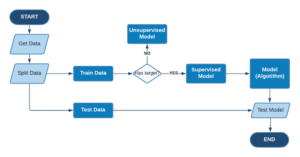
📌 Example Workflow:

flowchart: Raw Data → Cleaning → Analysis → ML Model → Business Decision
Watch on YouTube

Why Become a Data Scientist?

1. High Demand & Salary

💰 Average Salary (2024):

• Entry-Level: $90,000 – $120,000

• Senior-Level: $150,000 – $200,000+

📈 Job Growth:

• 35% increase (2020-2030, U.S. Bureau of Labor Statistics)

(Include a bar chart comparing data science salaries vs. other tech roles.)

2. Cross-Industry Applications

🌍 Industries Hiring Data Scientists:

✔ Tech (Google, Meta, Amazon)

✔ Finance (Fraud detection, risk modeling)

✔ Healthcare (Drug discovery, patient analytics)

✔ Retail (Customer segmentation, demand forecasting)

How to Become a Data Scientist (6 Steps)

1️⃣ Earn a Bachelor’s Degree

📚 Recommended Majors:

• Computer Science

• Statistics / Mathematics

• Engineering

• Economics (Quantitative Focus)

🎓 Pro Tip:

“A strong foundation in linear algebra & calculus is crucial for ML algorithms.”

2️⃣ Master Key Skills

🛠️ Technical Skills:

✔ Programming (Python, R, SQL)

✔ Machine Learning (Supervised/Unsupervised Learning)

✔ Big Data Tools (Hadoop, Spark)

✔ Data Visualization (Tableau, Power BI)

💡 Soft Skills:

✔ Problem-Solving

✔ Business Acumen

✔ Storytelling with Data

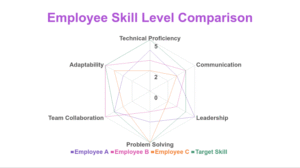
a radar chart comparing technical vs. soft skills
3️⃣ Specialize (Optional but Recommended)

🎯 Top Specializations:

• AI/Deep Learning

• Business Analytics

• Natural Language Processing (NLP)

• Computer Vision

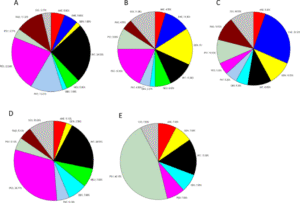
a pie chart showing demand for specializations
4️⃣ Build a Portfolio

📂 Project Ideas:

• Predictive Model for Stock Prices

• Customer Churn Analysis

• Social Media Sentiment Analysis

🔗 Where to Host?

• GitHub (Code)

• Kaggle (Datasets & Competitions)

• Personal Blog (Case Studies)

5️⃣ Get Certified (Boost Your Resume)

🏅 Top Certifications:

Certification Issuer

Google Data Analytics Coursera

IBM Data Science IBM

Microsoft Certified: Azure Data Scientist Microsoft

TensorFlow Developer Certificate

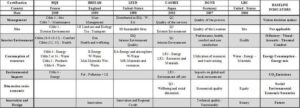
a comparison table of certifications
6️⃣ Land Your First Job

🔍 Job Titles to Look For:

• Junior Data Scientist

• Data Analyst

• Business Intelligence Analyst

📌 Pro Tip:

“Networking & LinkedIn outreach can fast-track your job search!”

Data Scientist vs. Related Roles

a Venn diagram comparing Data Scientist, Data Analyst, and ML Engineer
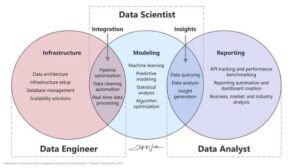
Role Focus Tools Avg. Salary

Data Scientist ML, Advanced Stats Python, R, SQL $120K+

Data Analyst Reporting, Dashboards Excel, Tableau $70K-$90K

ML Engineer Deploying AI Models TensorFlow, PyTorch $130K+

Real-World Applications

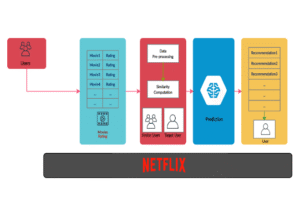
Case Study 1: Netflix Recommendation Engine

🎬 How It Works:

• Uses collaborative filtering to suggest shows.

• Saves $1B/year by reducing churn.

a simplified diagram of Netflix’s recommendation system
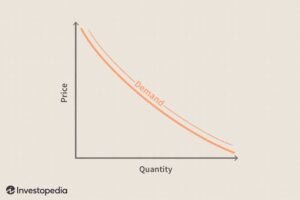
Case Study 2: Uber’s Dynamic Pricing

🚗 Data Science in Action:

• Predicts demand surges using ML.

• Adjusts prices in real-time.

a line graph showing price vs. demand
Is Data Science Right for You?

✅ Choose Data Science If You:

✔ Love solving puzzles with data

✔ Enjoy coding & statistics

✔ Want a high-growth, high-paying career

❌ Avoid If You:

✖ Dislike math/programming

✖ Prefer non-technical roles

Final Thoughts

Data science is one of the most exciting careers of the 21st century. With the right skills, you can unlock endless opportunities in tech, finance, healthcare, and beyond.

Did you find this guide helpful?

🔹 Comment Below: “Which step are you on in your data science journey?”

🔹 Feel free Like & Share this article!
Introduction To R Programming

0

Introduction

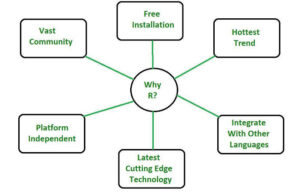
In today’s data-driven world, R has emerged as one of the most powerful programming languages for statistical computing, data analysis, and machine learning.

As an open-source language, R provides an extensive ecosystem of packages and libraries that make it a top choice for data scientists, statisticians, and analysts.

But why is R so popular? What makes it indispensable in data science? And how can you leverage R for your analytical projects?


In this article, we will explore:

✅ Key features of R for data science

✅ Essential R packages for data manipulation, visualization, and machine learning

✅ Real-world applications of R in top companies

✅ Visual examples (charts, diagrams, and code snippets) to enhance understanding

Why R for Data Science?

Data science involves extracting insights from raw data, and R provides a rich statistical and graphical environment to achieve this. Below are some compelling reasons why R is a go-to tool for data professionals:

1. Extensive Statistical Modeling Support

R was built by statisticians, for statisticians. It offers a comprehensive suite of statistical techniques, including:

• Regression analysis (linear, logistic, polynomial)

• Hypothesis testing (t-tests, ANOVA, chi-square)

• Time-series forecasting (ARIMA, exponential smoothing)

• Bayesian inference

📊 Example: A linear regression model in R:

R

model <- lm(Sales ~ Advertising + Price, data = marketing_data)

summary(model)

2. Powerful Data Visualization

R’s ggplot2 is one of the most advanced data visualization libraries, enabling stunning and interactive plots.

📈 Example: A ggplot2 scatter plot with trendline:

R

library(ggplot2)

ggplot(mtcars, aes(x = wt, y = mpg)) +

geom_point() +

geom_smooth(method = “lm”)

Output:

Watch on YouTube

3. Seamless Data Wrangling with dplyr

The dplyr package (part of the tidyverse) simplifies data manipulation with intuitive functions:

• filter() – Select rows based on conditions

• select() – Pick columns

• mutate() – Create new variables

• group_by() + summarize() – Aggregate data

📋 Example:

R

library(dplyr)

sales_data %>%

filter(Region == “North”) %>%

group_by(Product) %>%

summarize(Total_Sales = sum(Sales))

4. Integration with Databases & Big Data Tools

R can connect to SQL databases (PostgreSQL, MySQL), NoSQL (MongoDB), and even Hadoop/Spark via:

• RJDBC / RODBC (for SQL)

• mongolite (for MongoDB)

• sparklyr (for Apache Spark)

Diagram of R’s data connectivity options

5. Machine Learning & AI Capabilities

R supports advanced machine learning through packages like:

• caret (Classification And Regression Training)

• mlr (Machine Learning in R)

• randomForest (for ensemble learning)

• xgboost (for gradient boosting)

🤖 Example: Training a random forest model:

R

library(randomForest)

model <- randomForest(Species ~ ., data = iris)

print(model)

Decision tree visualization

Top R Packages for Data Science

Package Use Case Example Functionality

ggplot2 Data Visualization geom_point(), geom_bar()

dplyr Data Wrangling filter(), mutate(), summarize()

tidyr Data Cleaning pivot_longer(), drop_na()

shiny Interactive Dashboards shinyApp(ui, server)

caret Machine Learning train(), predict()

lubridate Date-Time Manipulation ymd(), floor_date()

plotly Interactive Graphs ggplotly()

Bar chart comparing package downloads from CRAN

Real-World Applications of R in Top Companies

1. Google (Flu Trends Analysis)

Google uses R to predict flu outbreaks based on search queries.

flu trends visualization from Google

2. Facebook (Social Network Analysis)

Facebook applies R for user behavior analytics and network graph modeling.

Social network graph example

3. Uber (Dynamic Pricing & Visualization)

Uber leverages R Shiny for real-time pricing dashboards.

4. IBM (Watson AI & Analytics)

IBM integrates R into Watson Studio for predictive modeling.

IBM Watson workflow diagram

Conclusion & Next Steps

R is indispensable for data science due to its:

✔ Statistical prowess

✔ Visualization capabilities

✔ Data manipulation efficiency

✔ Machine learning integration

Want to learn R for data science? Check out the embedded video in this article and stay tuned for my upcoming video tutorials where I’ll demonstrate hands-on R coding for:

• Data cleaning & wrangling

• Advanced visualizations

• Machine learning models